skip to main |
skip to sidebar
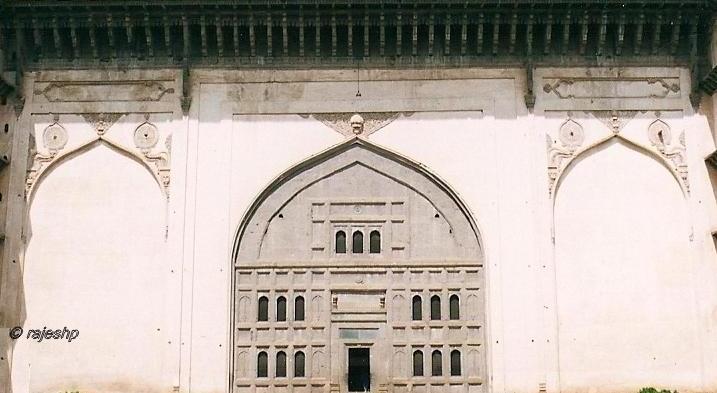
Barah Kaman constructed in 1672, is an another interesting monument in Bijapur (State: Karnataka). It is the incomplete mausoleum of Ali Adil Shah II. (Click on the images for bigger picture)
 It is an elegant structure with 12 interleaving graceful arches. It was previously named as Ali Roza, but later ruler of Bijapur changed its name to its current name of Barah Kaman as this was the 12th monument during his reign.
 It has the tombs containing the graves of Bijapur ruler Ali, and his queens.
Built in 1659, the Gol Gumbaz is the mausoleum of Mohammed Adil Shah of the Adil Shahi dynasty who ruled the Sultanate of Bijapur (State: Karnataka). (Click on the images for bigger picture)
 This is a massive structure with a square chamber measuring nearly 50 m on each side and is covered by a huge dome 43.3 m in diameter and attains the height of 27.4 m from a circular platform. There are four octagonal towers one in each corner of the chamber. Each tower consists of seven storeys and the upper floor of each opens on to a round gallery which surrounds the dome. If I remember correctly there are 150 steps to climb. In the center of the chamber are the tombs of Muhammad Adil Shah II and his relations.
 Apart from his sheer size another most interesting aspect of the enclosed place is acoustics. At the top inside the dome it is a whispering gallery where even the smallest sound is heard across the other side of the Gumbaz. At the periphery of the dome is a circular balcony where any whisper, clap or sound gets echoed around 7 times. Anything whispered from one corner of the gallery can be heard clearly on the diagonally opposite side.
 This Dome is the second largest one in the world which is unsupported by any pillars.
Tansen is the father of Hindustani classical music. He was an extraordinarily gifted vocalist, known for a large number of compositions. He was born in the small village near Gwalior. The great Mian Tansen, one of the 'Nine Jewels' of Emperor Akbar's court. At some point, he was disciple for some time to Swami Haridas and later Muhammad Ghaus was spiritual leader. (Click on all the images for bigger picture)
 The tomb of Tansen is built in the early Mughal architectural style and is surrounded by lush gardens in typical Mughal style. It is built very next to the tomb of Muhammad Ghaus. When compared with other architectural wonders in this place it is very simple.
 Every year a national level music festival is organized here in November/December.
Next day morning we proceeded from Gwalior to our next destination Shivpuri.
Distance: Gwalior ---> Shivpuri 114 kms
In the 16th century Ghous Mohammed was a Afghan Prince who later turned into a sufi saint. He had helped Babur to win the Gwalior fort. (Click on all the images for bigger picture)
 In Gwalior there is mausoleum built for him in the typical Mughal architecture.
 Here the interesting aspect are hexagonal pillars and screens using pierced stone technique. The marvelous stone works coupled with an excellent architecture, the tomb looks gorgeous.
 It is an elegant structure with 12 interleaving graceful arches. It was previously named as Ali Roza, but later ruler of Bijapur changed its name to its current name of Barah Kaman as this was the 12th monument during his reign.
 It has the tombs containing the graves of Bijapur ruler Ali, and his queens.